

A wallet can show a transaction as “successful” and still leave you with less money, a risky token approval, or an asset you never intended to receive. That counterintuitive gap explains why transaction simulation has become one of the most useful ideas in DeFi security. The question is not simply whether a transaction will execute. It is what the transaction is likely to do to your balances, permissions, and future exposure before you sign it.
For US-based DeFi users moving among Ethereum and EVM-compatible networks, this distinction matters because the same familiar interface can conceal very different contracts, tokens, fees, and liquidity conditions. A multi-chain wallet reduces the friction of switching networks, but convenience can also make mistakes easier to repeat. Comparing a wallet workflow with and without simulation reveals the broader trade-off: speed versus inspection, simplicity versus context, and broad dApp access versus controlled permissions.
Myth: A transaction preview tells you exactly what will happen
Reality is more conditional. A transaction simulation is an attempted execution of a proposed call against a blockchain state, usually before the user signs it. The wallet can inspect the contract interaction and estimate outcomes such as tokens sent, tokens received, balance changes, approvals, or a likely revert. This is far more informative than a generic prompt saying “interact with contract.” But the result is still an estimate based on a particular state and execution environment.
That boundary is easy to miss. DeFi state changes continuously. A pool’s reserves can move, a lending position can approach liquidation, a token’s transfer behavior can depend on conditions, and a contract can respond differently when called through another route or at another block. Simulation therefore answers a practical question—“What appears likely if this call executes under the inspected conditions?”—rather than making a permanent guarantee about the future.
The most important conceptual distinction is between execution safety and economic safety. Simulation can often identify a revert, an unexpected asset transfer, or a suspicious approval. It cannot automatically establish that a trade has a fair price, that a protocol is solvent, that a token is liquid, or that a contract will remain trustworthy after you approve it. A transaction may simulate cleanly and still be economically poor.
Two wallet approaches: blind signing versus inspected signing
The basic wallet prompt
A conventional wallet workflow focuses on authorization. The user chooses a dApp action, reviews a transaction request, and signs it. This model is relatively portable and can work with almost any dApp because the wallet does not need to interpret every application-specific behavior. Its weakness is that the user may be forced to translate technical fields—contract addresses, hexadecimal data, gas settings, and spender permissions—into a decision without enough context.
This approach is not always reckless. Experienced users may recognize a known contract, understand the action, and deliberately accept the risk. For a simple transfer to a verified address, extensive interpretation may add little value. The trade-off becomes unfavorable when the request is opaque, the user has crossed to a new chain, or the dApp is asking for a broad token approval rather than a one-time movement of funds.
The simulation-assisted wallet
A simulation-assisted workflow adds an interpretation layer before signing. It can translate a complex call into a more human-readable forecast: which assets may leave the wallet, which may arrive, whether an approval is being granted, and whether the call is expected to fail. In a multi-chain setting, that context is particularly useful because network names and token symbols are not enough to establish identity. Similar symbols can exist on different chains, while the same dApp brand may deploy multiple contracts with different properties.
The practical advantage is not that the wallet “knows” whether every transaction is good. It is that the user gets a chance to compare the intended action with the likely state change. If the user expects to swap one asset for another but the preview shows an unfamiliar token transfer or a large permission, that mismatch is a reason to pause.
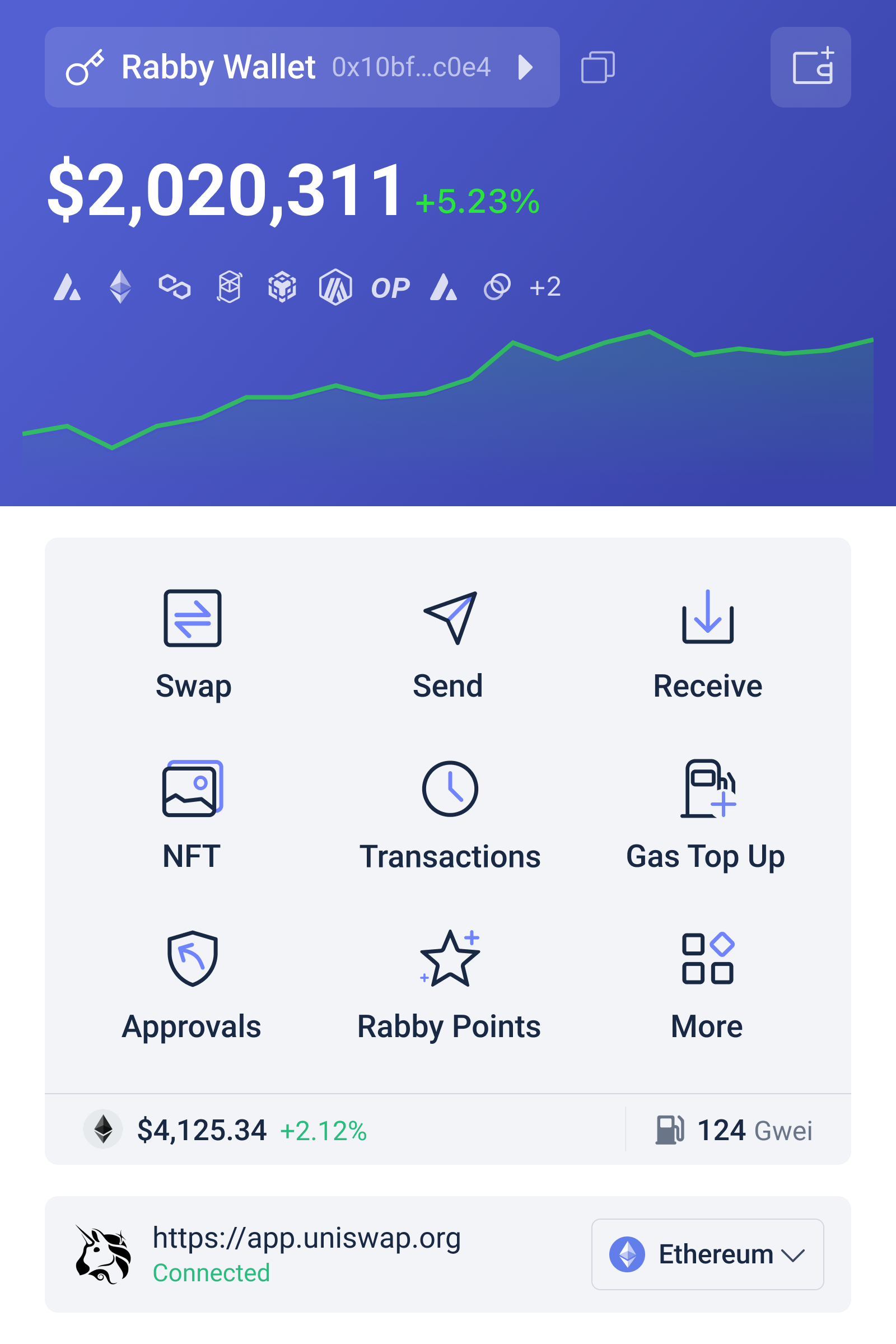
For readers assessing an advanced rabby workflow, the useful question is not whether a wallet promises security in the abstract. Ask how it combines transaction simulation, dApp connectivity, chain selection, and permission visibility into one signing decision. Security features are most valuable when they are placed at the moment a user can still change course.
Why dApp integration changes the security problem
Wallets are often described as bridges to dApps, but the bridge is not neutral. When a wallet connects to a decentralized exchange, lending market, bridge, or staking application, it may receive requests involving multiple contracts and token permissions. The user experience can feel like one continuous application even though the action crosses several technical boundaries.
Good dApp integration should preserve that context. It should make clear which chain is active, which account is signing, which contract is being called, and what permission is being created. Simulation can then connect the abstract call to consequences visible in the account. Without that connection, a polished interface may reduce healthy skepticism: the smoother the flow, the less likely a hurried user may be to inspect the request.
There is also a compatibility trade-off. DeFi developers frequently use upgradeable contracts, aggregators, routers, permit-style signatures, and application-specific transaction patterns. A wallet that tries to interpret every call may occasionally produce incomplete or ambiguous results. A wallet that displays only raw data supports broader compatibility but leaves more work to the user. The strongest design is therefore not maximum automation; it is useful interpretation paired with clear uncertainty when the wallet cannot confidently decode an action.
Multi-chain convenience versus multi-chain confusion
A multi-chain wallet solves a real operational problem. Users do not want separate interfaces for every EVM network, especially when managing assets, switching dApps, or comparing transaction costs. A single wallet can provide a consistent account experience across chains and help users move through an increasingly fragmented ecosystem.
Yet multi-chain support creates a subtle identity problem. An address may look identical across EVM networks, but the address alone does not tell you which chain holds the asset or which contract you are interacting with. A token labeled with a familiar ticker can be unrelated to the asset on another network. A bridge transaction can also change the risk profile: the user is no longer merely swapping assets inside one environment but relying on contracts and messaging systems that connect separate domains.
This is where simulation is most useful as a discipline rather than a guarantee. Before signing, compare four things: the active network, the intended dApp action, the expected asset movement, and the permissions that persist after execution. If any one of these does not match your mental model, stop. A lower network fee is not a substitute for correct chain identification.
Where transaction simulation breaks down
Simulation has meaningful limits. First, it depends on the state used for the forecast. A price can change between simulation and inclusion, particularly in markets with thin liquidity or substantial volatility. Slippage limits help define acceptable execution, but they do not make an unfavorable trade favorable. They simply constrain one class of outcome.
Second, not every risk is visible in balance changes. A token may carry transfer restrictions, unusual tax logic, blacklist mechanisms, or liquidity limitations. A contract may be legitimate at the time of interaction yet expose users to governance, upgrade, oracle, or counterparty risks later. Simulation can reveal what the call appears to do; it cannot replace protocol due diligence.
Third, signatures are broader than ordinary transactions. Some dApps request typed messages or permits that authorize later actions without an immediate on-chain transfer. A user who reviews only current balance changes may overlook the future authority granted by the signature. Permission management should therefore be treated as a separate security layer, not merely another line in a transaction preview.
Finally, a simulation may fail or be unavailable. That does not automatically mean the transaction is malicious; it can reflect an unsupported contract pattern, changing state, insufficient context, or a technical limitation. But it should reduce confidence. A failed simulation is a prompt to investigate, not a button to click past reflexively.
A reusable decision framework for DeFi signing
Use a simple sequence before approving a complex action. First, identify the intent: are you swapping, depositing, borrowing, bridging, claiming, or granting approval? Second, inspect the effect: what assets should leave, arrive, or change status? Third, inspect the authority: what can this contract do after the transaction or signature? Fourth, check the context: is the chain, account, contract, and fee consistent with the action you intended?
This framework is more durable than memorizing lists of suspicious phrases. It also works when a wallet’s interface changes. If the simulation says the action is expected to revert, the correct response is not necessarily “never use this dApp”; it is to determine whether the failure is intentional, temporary, or evidence of a mistaken setup. If the preview shows an unexpected approval, the question is whether that permission is necessary and appropriately limited.
For active DeFi users, the highest-value habit may be separating routine actions from high-consequence actions. A familiar transfer to a known address may need a quick review. A new bridge, leveraged position, unlimited approval, or contract claim deserves slower inspection. This risk-based approach avoids both extremes: blindly signing everything and treating every transaction as a research project.
What to watch as wallet security evolves
Recent positioning around wallets for Ethereum and EVM networks emphasizes a unified experience across chains, dApps, and on-chain activity. The important development to watch is not simply how many networks a wallet supports, but how well it preserves meaning while users move between them. Better security will likely depend on clearer explanations of permissions, more reliable simulation coverage, and stronger separation between what a wallet can verify and what remains a user judgment.
If those capabilities improve together, multi-chain wallets could become less like passive key holders and more like transaction interpretation systems. That would not remove smart-contract risk. It could, however, shift the default from “sign first, investigate later” toward “understand the expected state change, then authorize.” The condition is transparency: users need to see uncertainty rather than receive a false impression of certainty.
FAQ
Does transaction simulation guarantee that my funds are safe?
No. It can help identify likely execution results, unexpected transfers, approvals, and probable failures, but it cannot guarantee future blockchain state, protocol solvency, token liquidity, contract honesty, or protection from every signature-based risk.
Why is simulation especially useful in a multi-chain wallet?
Because the same address format, token symbol, and dApp branding can appear across different EVM networks. Simulation helps connect the proposed action to a specific chain and expected asset movement, reducing confusion that a familiar-looking interface may otherwise hide.
What should I do when a simulation fails?
Pause and determine why. Confirm the network, account, contract, balance, and intended action. A failed simulation can result from a real transaction problem or from limited decoding support, but either way it is a reason to investigate rather than dismiss the warning.
The sharper mental model is simple: a wallet does not make a transaction safe merely by displaying it, and simulation does not make a contract trustworthy merely by reproducing its execution. The value lies in comparing intention, expected effects, and granted authority before signing. In a fragmented DeFi environment, that moment of comparison is often the difference between convenience and informed control.